Quick answer: The best Odoo team in Ahmedabad for your business is one that covers five roles: a functional consultant who understands your processes, developers who build only what standard Odoo cannot do, someone who tests, a project manager who owns the plan and a clear support model after go-live. Check the partner's level in Odoo's official partner directory, ask who on your project is Odoo-certified, and ask to meet the people who will actually do the work. Local presence helps with workshops and go-live, but fit and references matter more.
What makes the best Odoo team in Ahmedabad for your business?
Odoo is the same software whichever company sets it up. What changes from one project to the next is the team: how well it understands your business, how much custom code it writes, how it tests and how it supports you after go-live. If you searched for the best Odoo team in Ahmedabad, the honest answer is that it depends on your processes, and this guide gives you a way to compare any Odoo company in Ahmedabad, including us, on the things that decide whether a project goes well.
Odoo itself sets expectations for its partners. Its partner programme page says official partners are expected to obtain Odoo certification, train their staff, assign dedicated resources to Odoo projects and become the first level of support for their clients. Those four points are a good starting frame for any meeting.
What roles does a complete Odoo team need?
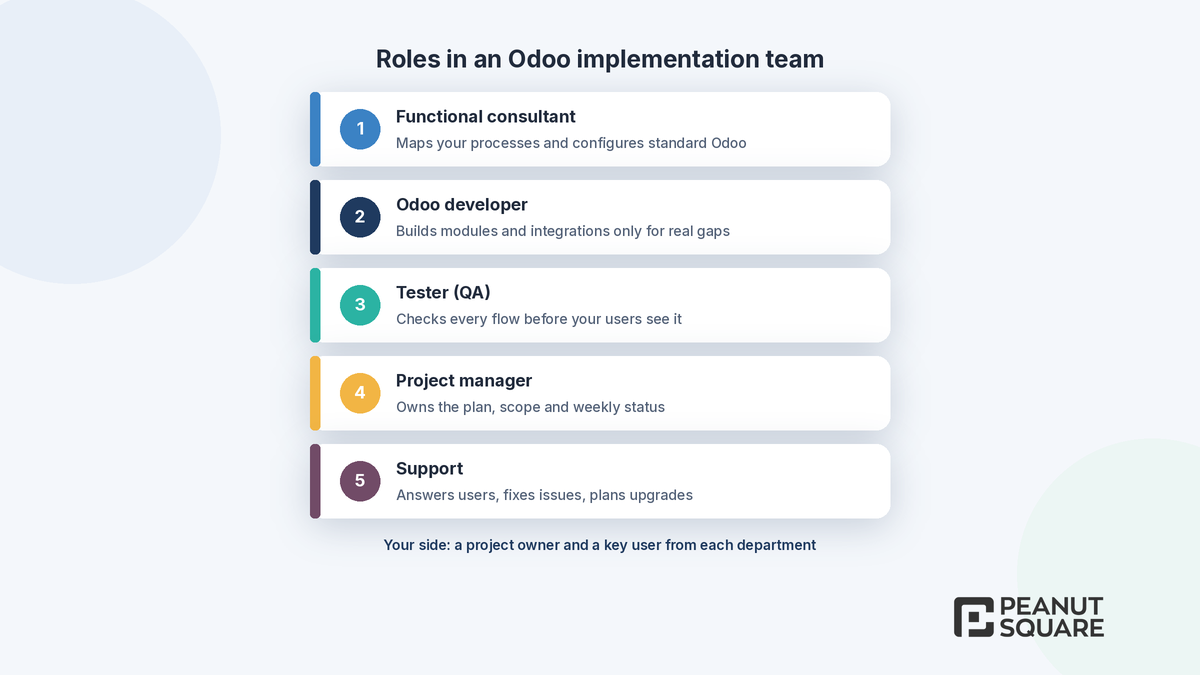
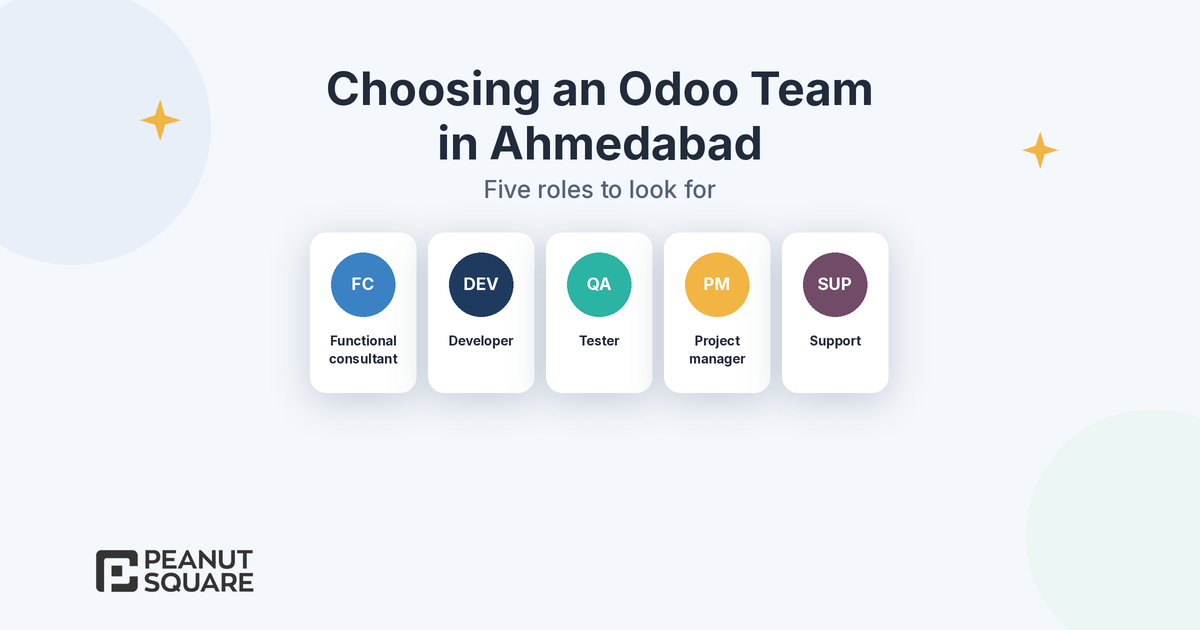
A small project may have one person wearing two hats, but every role below should be covered by someone you can name:
Functional consultant: maps how you quote, buy, stock, produce, invoice and report, and decides how standard Odoo should be configured.
Odoo developer: builds custom modules, reports and integrations for the gaps that configuration cannot close.
Tester (QA): checks each flow with realistic scenarios before your users see it, and again after every change.
Project manager: owns the plan, the scope and the weekly status, and is your single point of contact.
Support: answers user questions, fixes issues and plans upgrades once you are live.
Your side needs roles too: a project owner who can take decisions, and a key user from each department who knows the daily work. Many ERP projects slow down because these people are not given time for workshops and testing.
Functional depth
Functional depth means the team understands your industry's processes, not only Odoo's menus. In a first meeting, describe one real flow, such as an order that is partly delivered, a job-work challan or a purchase with freight and duty, and ask how they would handle it in standard Odoo.
For businesses in Gujarat, ask specifically about India localization. Odoo's India localization documentation lists modules for GST accounting, e-invoicing, e-way bills (including e-way bills from the Inventory app) and GST return filing. A strong functional consultant can explain which of these you need and show them in a demo database. A good sign is a team that first asks how you work today and only then talks about modules.
Technical depth
Technical depth shows in what a team chooses not to build. Odoo's upgrade documentation warns that a database with custom modules cannot be upgraded until a version of those modules is available for the target Odoo version. Every custom module therefore adds future upgrade work, so a careful team configures standard Odoo first, uses Odoo Studio for simple changes and writes code only for real gaps.
Ask the team how they decide between configuration, Studio and code, where the code is stored and how it is tested, and who will port it to the next Odoo version. Our guide to Odoo Studio vs custom development explains the trade-offs, and Odoo's Studio documentation lists what Studio can do without code.
Project management
A clear plan protects both sides. Ask to see a sample project plan with phases (discovery, fit-gap, configuration, development, data migration, testing, training, go-live) and who signs off each one. Ask how change requests are handled, how often you will get a status update, and what happens if a key person on their side leaves.
Look for a written fit-gap document before development starts. It lists each requirement as standard Odoo, configuration, Studio or custom code, which makes the scope, cost and upgrade impact visible early. Our Odoo implementation in Ahmedabad guide walks through these phases step by step.
Support model
Go-live is when real usage starts. Ask how support works in the first weeks, how you raise a ticket, how quickly urgent issues are answered and what is included in a monthly support arrangement. Odoo's partner programme describes partners as the first level of support for their clients, so your Odoo team should be the first place your users go. Our Odoo support page shows how we structure this.
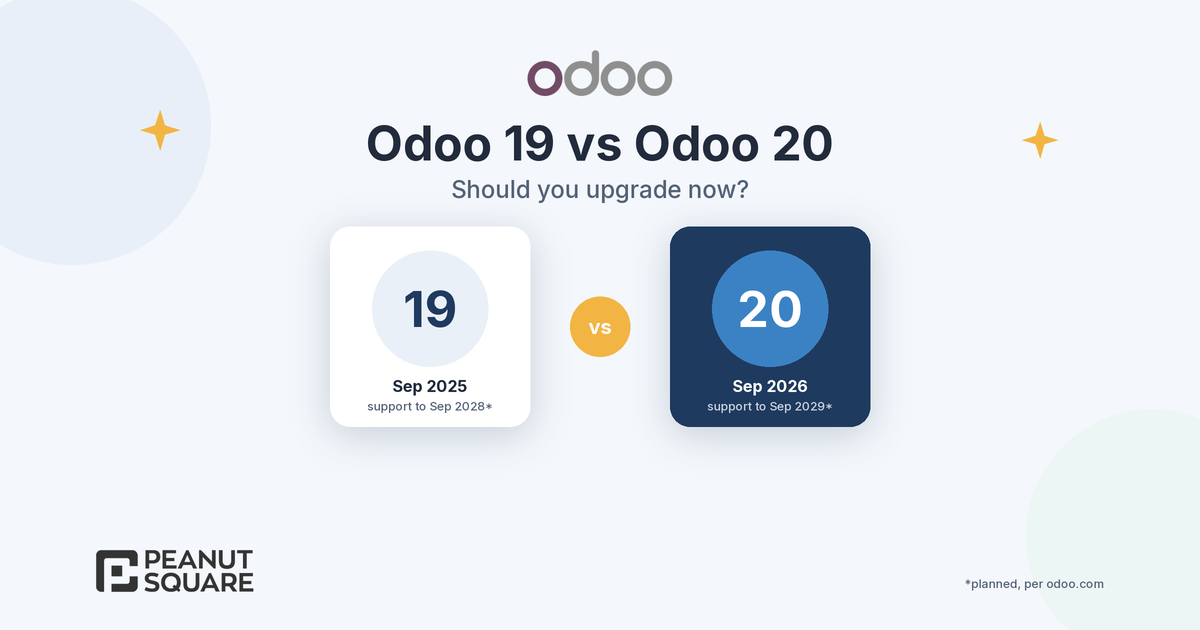
Ask about upgrades too. Odoo's support documentation says each major version gets three years of standard support, and security updates are only provided during standard support. A good team will tell you when your version leaves standard support and plan the upgrade with you, including any custom modules.
How do you check an Odoo partner's level?
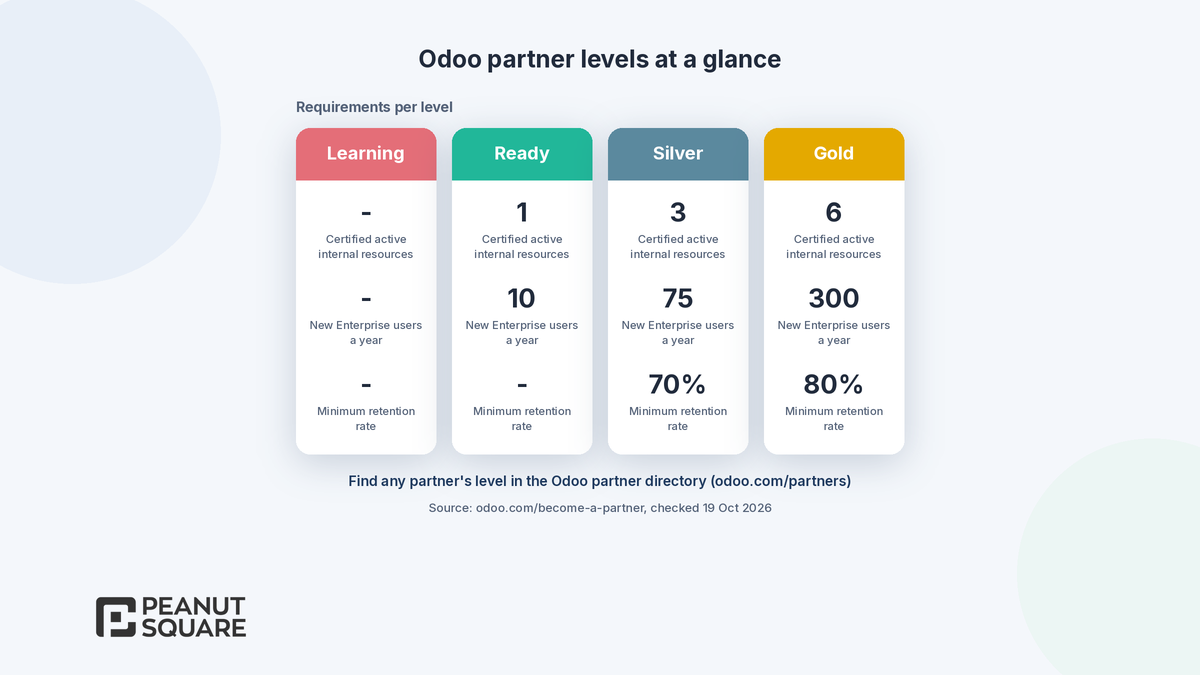
Search for the company in Odoo's official partner directory. Odoo's partner programme has four levels: Learning, Ready, Silver and Gold. Its partner programme page lists the number of certified active internal resources required at each level: one for Ready, three for Silver and six for Gold, with no minimum listed for Learning. Ready, Silver and Gold also have yearly targets for new Odoo Enterprise users, and Silver and Gold have minimum customer retention rates.
The level tells you about a partner's sales volume and certified headcount with Odoo. It does not tell you whether the team knows your industry, how it writes code or how it supports clients, so use it as one signal next to references and your own meetings.
Questions to ask an Odoo team in a meeting
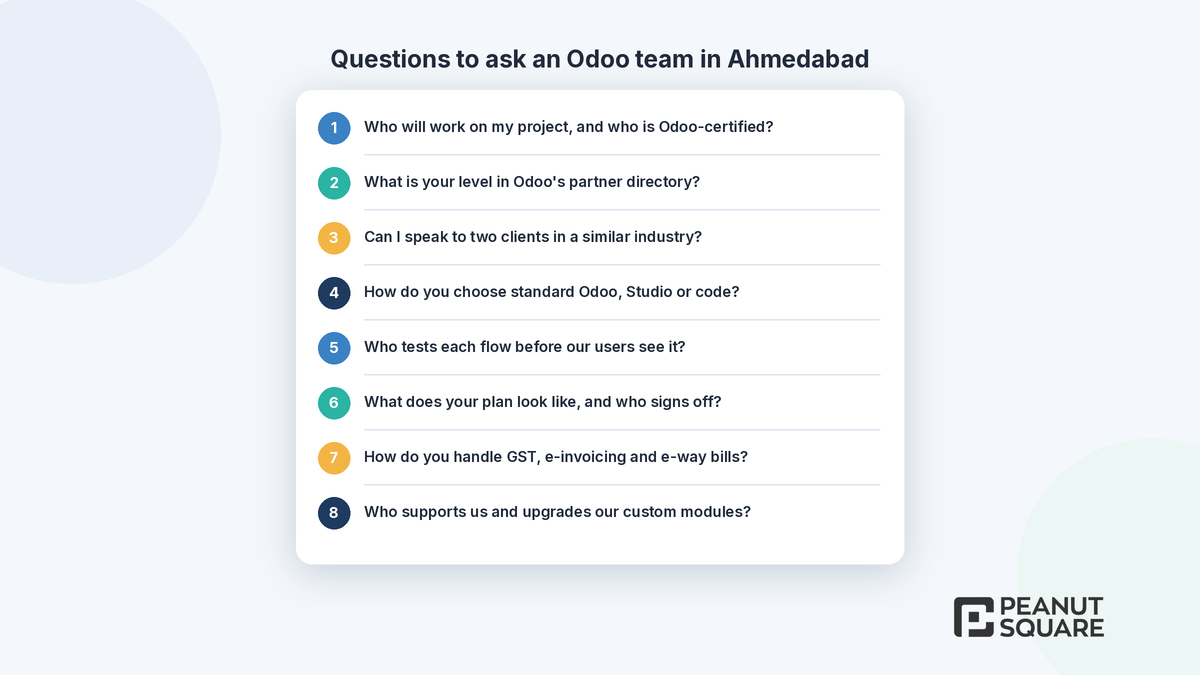
Take this list into your first meeting with any Odoo company in Ahmedabad and write down the answers:
Who exactly will work on my project, in which role, and who is Odoo-certified?
What is your partner level in Odoo's partner directory?
Can I speak to two clients in a similar industry?
How do you decide between standard Odoo, Studio and custom code?
Who tests each flow before our users see it?
What does your project plan look like, and who signs off each phase?
How do you handle GST, e-invoicing and e-way bills in Odoo?
What does support look like after go-live, and who upgrades our custom modules?
Score each answer from 1 to 5 and compare teams side by side. Our 12-point checklist for choosing an Odoo partner near you goes into more detail.
Apply the same checklist to Peanut Square
We are an Ahmedabad-based Odoo company, so here are our answers to the questions we can answer in writing:
Partner status: Odoo Learning Partner.
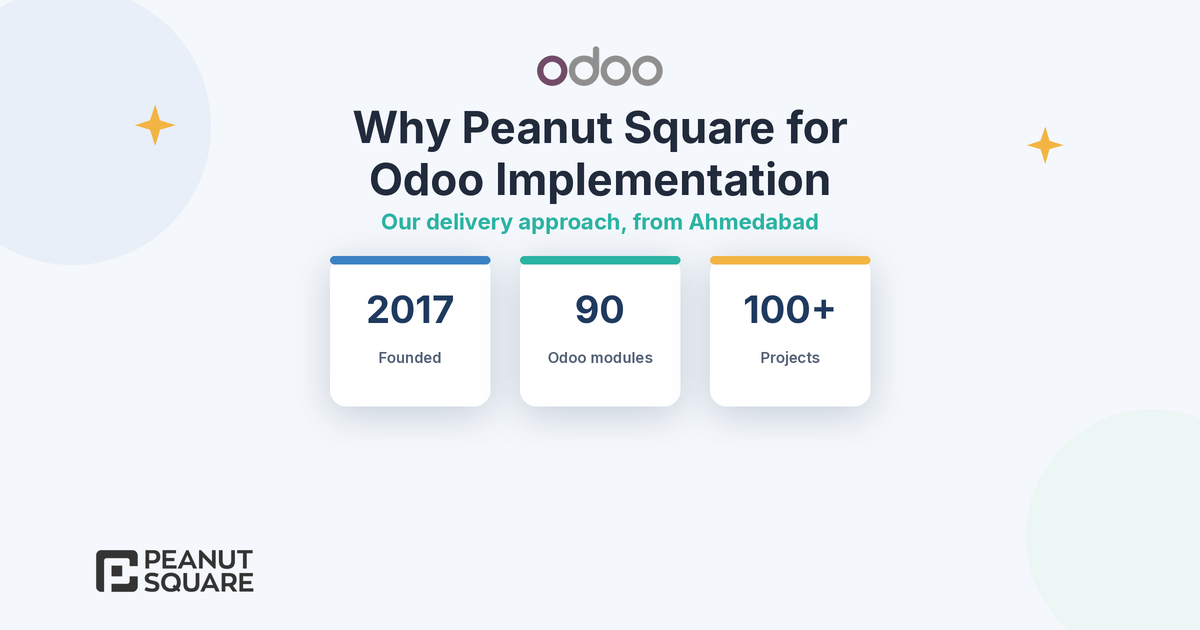
Founded: 2017, in Ahmedabad, Gujarat.
Odoo modules developed: 90.
Projects delivered: 100+.
Certification: our team includes an Odoo-certified consultant.
Odoo clients we can name: Renite Vitrified (https://renitevitrified.com/), Woodleaf and Madhav Solar.
Our Odoo implementation and Odoo services pages describe what we take on, and our case studies show project write-ups. For the rest, such as references in your industry and who would work on your project, ask us in a meeting, the same way you would ask anyone else.
Want to meet our Odoo team in Ahmedabad? Book a call: https://www.peanutsquare.com/en/contact
About the author: Nishant Patel, CTO, Peanut Square
Nishant leads technology at Peanut Square, an Odoo Learning Partner founded in 2017 and based in Ahmedabad, Gujarat. The team has developed 90 Odoo modules, delivered 100+ projects and includes an Odoo-certified consultant.
Sources
Odoo, Become a Partner (partner expectations and level requirements): https://www.odoo.com/become-a-partner
Odoo partner directory: https://www.odoo.com/partners
Odoo 20.0 documentation, India localization: https://www.odoo.com/documentation/20.0/applications/finance/fiscal_localizations/india.html
Odoo 20.0 documentation, Upgrade: https://www.odoo.com/documentation/20.0/administration/upgrade.html
Odoo 20.0 documentation, Standard and extended support: https://www.odoo.com/documentation/20.0/administration/standard_extended_support.html
Odoo 20.0 documentation, Studio: https://www.odoo.com/documentation/20.0/applications/studio.html/
What makes a strong Odoo team in Ahmedabad?
A strong Odoo team covers five roles: a functional consultant who understands your processes, developers who build only what standard Odoo cannot do, a tester, a project manager and a clear support model after go-live. It should also have Odoo-certified people on your project, a verifiable level in Odoo's partner directory and references in your industry.
How do I check an Odoo partner's level?
Search for the company in Odoo's official partner directory at odoo.com/partners. Odoo's partner programme has four levels: Learning, Ready, Silver and Gold. Its become-a-partner page lists one certified active internal resource for Ready, three for Silver and six for Gold, with no minimum listed for Learning.
Does an Odoo team need to be local to Ahmedabad?
Not always, but a local team makes on-site discovery workshops, user training and go-live support easier, especially for manufacturing and warehouse processes that are best understood on the shop floor. Fit, references and the people who will actually work on your project matter more than distance.
What questions should I ask an Odoo company in a first meeting?
Ask who will work on your project and who is Odoo-certified, the company's level in Odoo's partner directory, for two references in your industry, how they choose between standard Odoo, Studio and custom code, who tests each flow, what the project plan looks like, how they handle GST, e-invoicing and e-way bills, and who supports you and upgrades custom modules after go-live.
Why does custom code matter when choosing an Odoo team?
Odoo's upgrade documentation warns that a database with custom modules cannot be upgraded until those modules are available for the target Odoo version. Every custom module adds future upgrade work, so a careful team configures standard Odoo first, uses Studio for simple changes and writes code only for real gaps.